Welcome to the Pepper Ridge North Valley's
Severe Weather Page
This is your weather warning resource page. Check this page for the latest watches and warning updates,
from The National Weather Service, Phoenix, Az.!
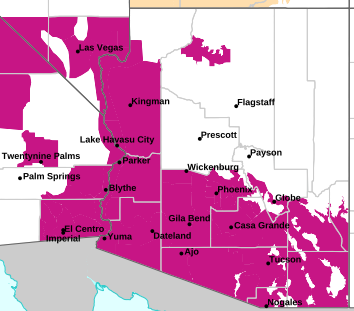
MAP OF CURRENT SOUTHWEST WATCHES, WARNINGS AND ADVISORIES
Local & Regional Weather Statements, Watches And Warnings
Weather Alerts for Central/North PhoenixIssued by the National Weather Service |
 FLOOD WATCH |
| CENTRAL/NORTH PHOENIX |
Areas Affected:
Aguila Valley - Northwest Valley - Tonopah Desert - Gila Bend - Buckeye/Avondale - Cave Creek/New River - Deer Valley - Central Phoenix - North Phoenix/Glendale - Scottsdale/Paradise Valley - East Valley - Fountain Hills/East Mesa - South Mountain/Ahwatukee - Southeast Valley/Queen Creek - Northwest Pinal County - West Pinal County - Apache Junction/Gold Canyon - Sonoran Desert Natl Monument |
| Effective: Sun, 11/1 12:41am |
Updated: Sun, 11/1 3:11am |
Urgency: Future |
| Expires: Sun, 11/1 3:00pm |
Severity: Severe |
Certainty: Possible |
|
Details:
* WHAT...Flash flooding caused by excessive rainfall continues to be
possible.

* WHERE...A portion of south central Arizona, including the following
areas, Phoenix Metro, rural areas of Maricopa County, and Northwest
Pinal County.

* WHEN...Through late tonight.

* IMPACTS...Excessive runoff may result in flooding of rivers,
creeks, streams, and other low-lying and flood-prone locations.
Low-water crossings may be flooded.

* ADDITIONAL DETAILS...
- An atmospheric river ahead of a weather system will continue to
bring well above normal moisture to the region through today and
lead to a prolonged period of light to moderate rainfall across
the Watch area. Embedded convection will produce pockets of
heavier rain. Additional rainfall amounts, on the order of 1-2",
through the course of Sunday on top of already moist soils, will
lead to additional runoff. Runoff in major streams, creeks, and
rivers may persist through the first half of the week.
- http://www.weather.gov/safety/flood
Information:
You should monitor later forecasts and be prepared to take action
should Flash Flood Warnings be issued. |
| FLOOD WATCH |
| CENTRAL/NORTH PHOENIX |
Areas Affected:
New River Mesa - Rio Verde/Salt River - Superior - Tonto Basin - Mazatzal Mountains - Pinal/Superstition Mountains - San Carlos - Dripping Springs - Globe/Miami - Southeast Gila County |
| Effective: Sun, 11/1 12:41am |
Updated: Sun, 11/1 3:11am |
Urgency: Future |
| Expires: Sun, 11/1 3:00pm |
Severity: Severe |
Certainty: Possible |
|
Details:
* WHAT...Flash flooding caused by excessive rainfall continues to be
possible.

* WHERE...A portion of south central Arizona, including mainly
Southern Gila County.

* WHEN...Through late tonight.

* IMPACTS...Excessive runoff may result in flooding of rivers,
creeks, streams, and other low-lying and flood-prone locations.
Low-water crossings may be flooded.

* ADDITIONAL DETAILS...
- An atmospheric river ahead of a weather system will continue to
bring well above normal moisture to the region through today and
lead to a prolonged period of light to moderate rainfall across
the Watch area. Embedded convection will produce pockets of
heavier rain. Additional rainfall amounts, on the order of 2-4+",
through the course of Sunday on top of already moist soils, will
lead to additional runoff. Runoff in major streams, creeks, and
rivers may persist through the first half of the week.
- http://www.weather.gov/safety/flood
Information:
You should monitor later forecasts and be prepared to take action
should Flash Flood Warnings be issued. |
Key to Icons for Local & Regional Weather Statements, Watches And Warnings

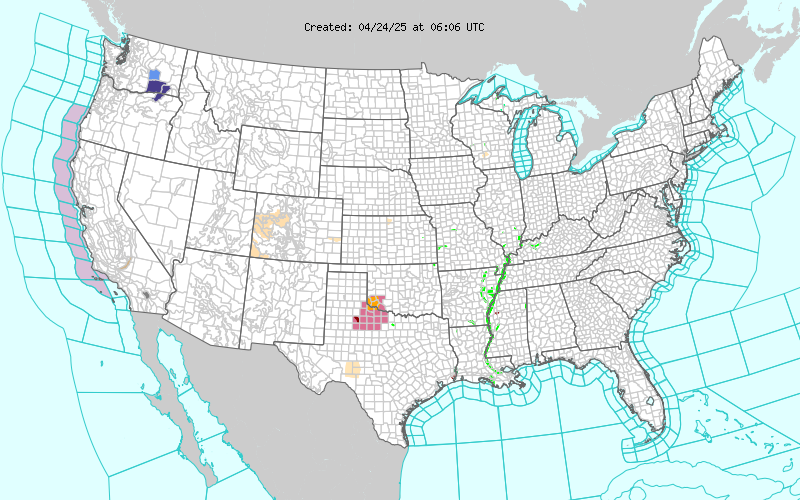
Map of the Current Watches, Warnings, and Advisories Nationwide:
|
|
Member of the:


|
North Valley Random Weather Facts |
HABOOB
The name comes from the Arabic word habb, meaning "wind." A Haboob is a giant wall of dust sometimes 3000ft tall,that travels a 40mph+, they frequently form here in Arizona from the gust front outflow boundary of summer thunderstorms. Haboobs are most frequent in Southwestern North America during the months of May through September, with the most frequent occurrence in late June, but they can occur in every month. (A picture of a classic Haboob appears on our Monsoon Page.)
Get the Facts PHP
|
|
Page layout last updated on Mar 8th, 2024
|
|
|


 New Feature